Moving to Dallas-Fort Worth
Dallas vs Austin for renters
In short
A one-bedroom’s median gross rent is $1,500 a month in the Austin metro and $1,393 in Dallas-Fort Worth (U.S. Census Bureau, ACS 2020–2024). On the BEA’s 2024 index, housing rents score 120.4 around Austin and 117.9 around Dallas. Neither has a state income tax.
By Joon Ma, designated broker, TREC #709941
Updated October 2026 · Source: U.S. Census Bureau ACS 2020–2024; BEA Regional Price Parities 2024; NOAA Climate Normals 1991–2020
Reading these numbers
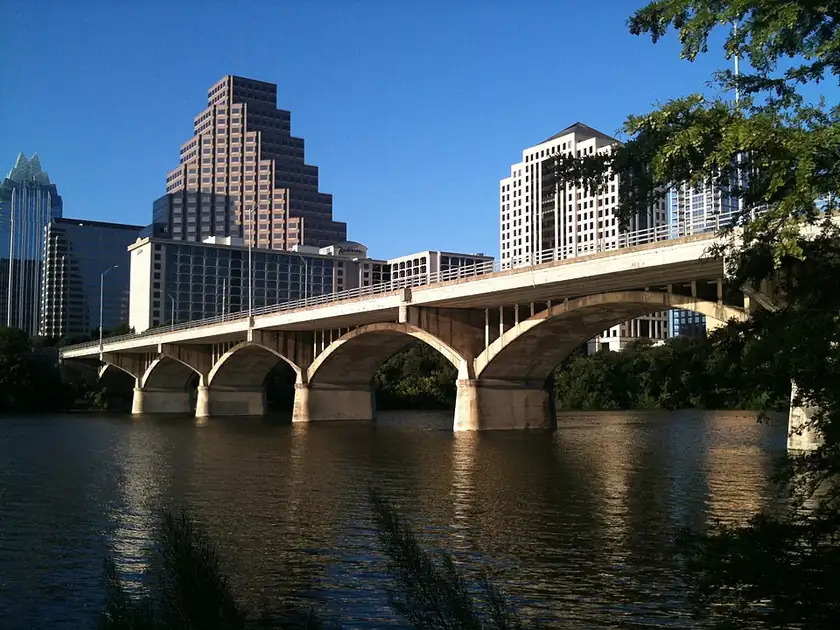
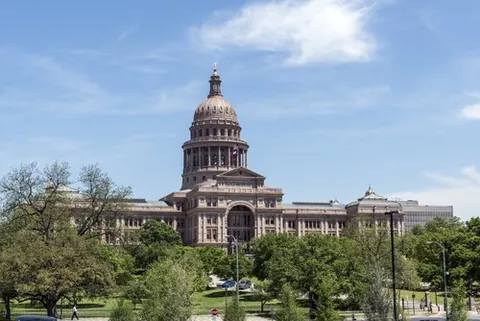
Austin is the capital of Texas and the seat of Travis County. Interstate 35 links it with Dallas: north of Hillsboro the highway splits in two, and its eastern branch, I-35E, runs through Dallas. Below, the two metro areas are set side by side on rent, prices, taxes, getting to work, rail, weather and the places people work.
We use metro areas first, because a commute does not stop at a city line, and city figures second. The Census Bureau’s current name for the Austin metro is Austin-Round Rock-San Marcos, from its 2023 delineation; the Dallas metro, Dallas-Fort Worth-Arlington, takes in 11 counties. Every figure carries its source, and we checked all of them on October 2, 2026.
Nothing here is a ranking. A higher number is just a higher number; how much it matters depends on your job, your budget and the way you like to get around.
What a lease costs
Median gross rent is the Census measure: rent plus utilities, when the renter pays them, across houses, duplexes and apartments alike. Newer buildings in either metro can list above it.
| Size | Dallas-Fort Worth | Austin |
|---|---|---|
| Studio | $1,388 | $1,434 |
| 1 bedroom | $1,393 | $1,500 |
| 2 bedrooms | $1,660 | $1,795 |
| 3 bedrooms | $1,934 | $2,108 |
| All rentals | $1,614 | $1,726 |
Source: U.S. Census Bureau, American Community Survey 2020–2024 5-year estimates, table B25031, in 2024 dollars.
Here the Austin metro is the higher one at every size: $107 more a month for a one-bedroom, $135 for two bedrooms and $174 for three. The survey’s margins of error for these medians run from $6 to $27, well under those differences.
Mixing every size together, the all-rentals median is $1,726 in the Austin metro and $1,614 around Dallas; inside the two cities it is $1,729 and $1,472.
| Size | Dallas | Austin |
|---|---|---|
| Studio | $1,335 | $1,427 |
| 1 bedroom | $1,354 | $1,544 |
| 2 bedrooms | $1,607 | $1,845 |
| 3 bedrooms | $1,665 | $2,202 |
| All rentals | $1,472 | $1,729 |
Source: the same Census table, city of Dallas and city of Austin.
The gap widens inside the two cities. A one-bedroom’s median is $1,544 in Austin and $1,354 in Dallas, $190 apart; at three bedrooms the difference reaches $537 a month ($2,202 against $1,665).
Each of the 17 other cities we cover around Dallas has its own medians; you will find them side by side in our Dallas suburbs guide.
Prices beyond the rent
The Bureau of Economic Analysis publishes Regional Price Parities, which compare price levels among metro areas against a U.S. average of 100. In its 2024 figures, released on February 19, 2026, the two metros split. For all goods and services, Dallas-Fort Worth scores 103.1 and Austin 98.1. For housing rents alone, the order reverses: 120.4 in Austin, 117.9 in Dallas-Fort Worth.
Source: BEA Regional Price Parities by metro area, 2024, rounded to one decimal.
State taxes are the same in both, since both are in Texas. The Texas Constitution bars a state tax on personal income (Article 8, Section 24-a). Sales tax is 6.25 percent at the state level, plus local rates of up to 2 percent, with a ceiling of 8.25 percent combined.
Sources: Texas Constitution, Art. 8, Sec. 24-a; Texas Comptroller of Public Accounts.
Getting to work, and rail
The average trip to work is almost the same length in the two metros: 27.3 minutes around Austin and 27.9 around Dallas, counting workers who don’t work from home. Public transportation carries 1.1 percent of Austin-area workers and 0.7 percent of Dallas-area workers.
Source: U.S. Census Bureau, ACS 2020–2024 5-year estimates, table S0801.
Austin: one commuter line, light rail planned
CapMetro Rail’s Red Line, open since March 22, 2010, runs 32 miles between Leander and downtown Austin, with 10 stations. Project Connect, the light rail plan approved by the Austin City Council in June 2023, would start on 9.8 miles of dedicated street lanes; one planned line is meant to reach Austin-Bergstrom International Airport.
Dallas-Fort Worth: light rail and three commuter lines
DART counts 93 miles of light rail, in Red, Blue, Green and Orange lines. Around it run three commuter lines: the Trinity Railway Express between the Dallas and Fort Worth downtowns since 1996, TEXRail from Fort Worth to DFW Airport since January 2019, and the Silver Line, opened October 25, 2025, from Plano across Richardson, Addison and Carrollton to the airport. North of Carrollton, the A-train continues to Lewisville and Denton.
If you plan to keep an Austin job and drive up for part of the week, time the trip on I-35 at the hour you would really make it: 3.5 hours by car, downtown Austin to downtown Dallas.
Weather
The normals put Austin a little warmer in winter and DFW a little warmer in July. January averages 50.1°F at Austin-Bergstrom against 46.3°F at DFW Airport; July, 84.5°F against 85.7°F. Yearly precipitation is within two inches.
| Normal | DFW Airport | Austin-Bergstrom |
|---|---|---|
| January | 46.3°F (7.9°C) | 50.1°F (10.1°C) |
| July | 85.7°F (29.8°C) | 84.5°F (29.2°C) |
| Yearly precipitation | 37.01 in (940 mm) | 35.57 in (903 mm) |
With July averages near 85°F in both places, the questions for a summer tour are the same: when the air conditioning was last serviced, which way the windows face, and whether utilities are billed by the unit or split among residents.
Source: NOAA National Centers for Environmental Information, U.S. Climate Normals 1991–2020. NOAA marks the Austin-Bergstrom normals as “representative”: at least 10 years of data, with gaps filled from nearby stations. Celsius and millimeters converted by AptViva.
Airports and toll roads
Austin’s airport is Austin-Bergstrom International, and no rail line reaches it yet; the light rail line meant to serve it is still a plan. Dallas-Fort Worth has two airports, DFW International and Dallas Love Field. At DFW, the Orange Line stops at Terminal A, and the Silver Line and TEXRail stop at Terminal B, so a flight can start with a train ride from several suburbs.
North of Dallas, several of the fastest roads charge tolls: the Dallas North Tollway, the President George Bush Turnpike and the Sam Rayburn Tollway. When we time a commute for you, we say whether the quickest route uses one, so you can weigh the toll against the rent.
Centers of work
In Austin
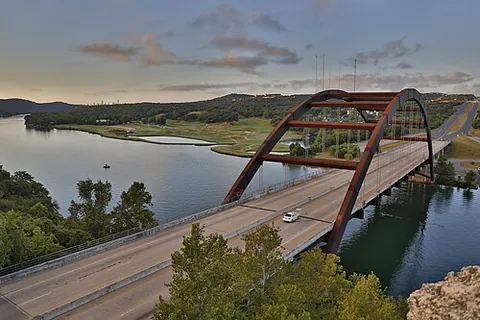
- Downtown Austin and the Texas State Capitol, the seat of state government.
- The University of Texas at Austin, founded in 1883.
- The Domain in northwest Austin, an office, retail and residential center whose first phase opened in March 2007 and that has been called Austin’s second downtown.
Around Dallas
The Dallas side spreads its offices out. Besides downtown and Uptown, there is Las Colinas in Irving, planned from 1972 and now home to more than 2,000 companies; the Telecom Corridor, which follows US 75 through Richardson for about 6.5 miles; Legacy West in Plano; and downtown Fort Worth to the west.
Because the work is spread out, two apartments at the same rent can mean very different mornings. Give us the address of the office and we compare the drive, or the train, from each place on your list.
Starting the search from Austin
Two months ahead is about right. Communities around Dallas usually hold an apartment only 45 to 60 days before move-in, since their residents give about 60 days of notice. Our guide on when to start looking breaks that time into weeks.
Many communities want a household income of about three times the monthly rent, measured against the full rent rather than a discounted one. Try the rent calculator before you settle on a budget.
Coming to study? UT Dallas is in Richardson, with its own Silver Line station, and our student apartments guide covers it along with UNT in Denton.
Austin is close enough for a day of tours. Tell us your must-haves first; we confirm availability by phone and plan the stops in order, so you can see your finalists in one trip and apply that week.
For applying from out of town and searching without a US credit history, see Moving to Dallas-Fort Worth.
The move itself
The 3 hours of moving we include at participating communities stay inside Dallas-Fort Worth, so they will not carry your things up from Austin. Where they help is the second leg, from temporary housing here to your new apartment. Or choose the cash option instead. Restrictions apply. See terms
Sources
We checked each of these on October 2, 2026. Census, BEA and NOAA figures come from the editions named next to them on this page.
- U.S. Census Bureau, ACS 2020–2024 5-year estimates, table B25031
- U.S. Census Bureau, ACS 2020–2024 5-year estimates, table S0801
- U.S. Bureau of Economic Analysis, Regional Price Parities, 2024
- NOAA NCEI, U.S. Climate Normals 1991–2020
- Texas Constitution, Art. 8, Sec. 24-a
- Texas Comptroller, Sales and Use Tax
- CapMetro, CapMetro Rail
- Wikipedia, Capital MetroRail
- DART, rail system
- Wikipedia, TEXRail
- Wikipedia, A-train (Denton County)
- Wikipedia, Austin, Texas
- Wikipedia, The Domain (Austin, Texas)
- Wikipedia, University of Texas at Austin
- Wikipedia, Interstate 35E (Texas)
- Wikipedia, Orange Line (DART)
- Wikipedia, Silver Line (DART)
- Wikipedia, Frisco, Texas (highways)
- Wikipedia, Richardson, Texas (highways)
Start from the commute
Send us the job or campus address, the month you plan to move and the rent you want to stay under. A licensed agent calls the communities that fit and comes back with a list you can tour in a day. You pay nothing; the community pays us.
A licensed agent replies Monday–Saturday, 9 a.m.–6 p.m.
A licensed agent will get back to you the way you asked, and will build your list from there.